Tag: Bilateralism & Multilateralism
-
ME Instability & the US-China Power Balance
1: How does the escalation of instability in the Middle East affect the global balance of power between the U.S. and China, and what are the secondary implications for stability in the Indo-Pacific? 2: While the U.S. faces a “credibility gap” as a security provider, China acts as a “free rider,” leveraging M. Eastern energy…
-
Meloni-Trump
Main question: What elements led to the breakdown of the Meloni-Trump partnership and what are the risks for Italy’s Atlanticist vision? Argument: The crisis stemmed from Italy denying the use of Sigonella airbase for Iranian operations and Trump’s harsh attacks on Pope Leo XIV, which Meloni declared unacceptable Conclusion: Geopolitical reality and core cultural values…
-
Jihadist expansion across borderlands in the Sahel
JNIM and ISSP are expanding into coastal West Africa to control illicit trade. Regional stability now depends on the new AES Unified Force’s ability to integrate operations with local security and overcome tensions to coordinate regionally.
-

High North and “La Dolcevita”
The 2026 Italian Arctic Policy responds to the end of Arctic exceptionalism by defining Italy as a “Near-Arctic State”. Through the concept of “teleconnections,” Italy links Arctic stability to Mediterranean security. It employs science diplomacy and the Navy’s “High North” operation to protect interests. Despite Russia’s isolation, Italy views functional dialogue as a “creative necessity”…
-

Global South Korea
Main question: How does South Korea navigate through the current geopolitical landscape? Argument: Considering the fact that the country has a new administration since June 2025, South Korea has been “reseting” and “recalibrating” current relations with major international actors in 2026. Conclusion: South Korea must find a balance in managing its alignment with Western countries…
-
The Eastern Mediterranean as Transmission Belt
Main question: Why is a region linking multiple geopolitical systems persistently underdiscussed? Argument: The Eastern Mediterranean functions as a systemic transmission belt structured by a maritime–energy nexus across sub-, system-, and supra-levels. Conclusion: Neglecting its connective structure increases the risk of cross-regional spillover and strategic surprise.
-
The Donroe Doctrine: A New Era for Cuba?
Question: Focused on the “Donroe Doctrine” vs regional stability. Argument: Centred on the use of Venezuelan energy as a coercive tool. Conclusion: Highlighted the EU’s “middleman” role via the PDCA framework.
-
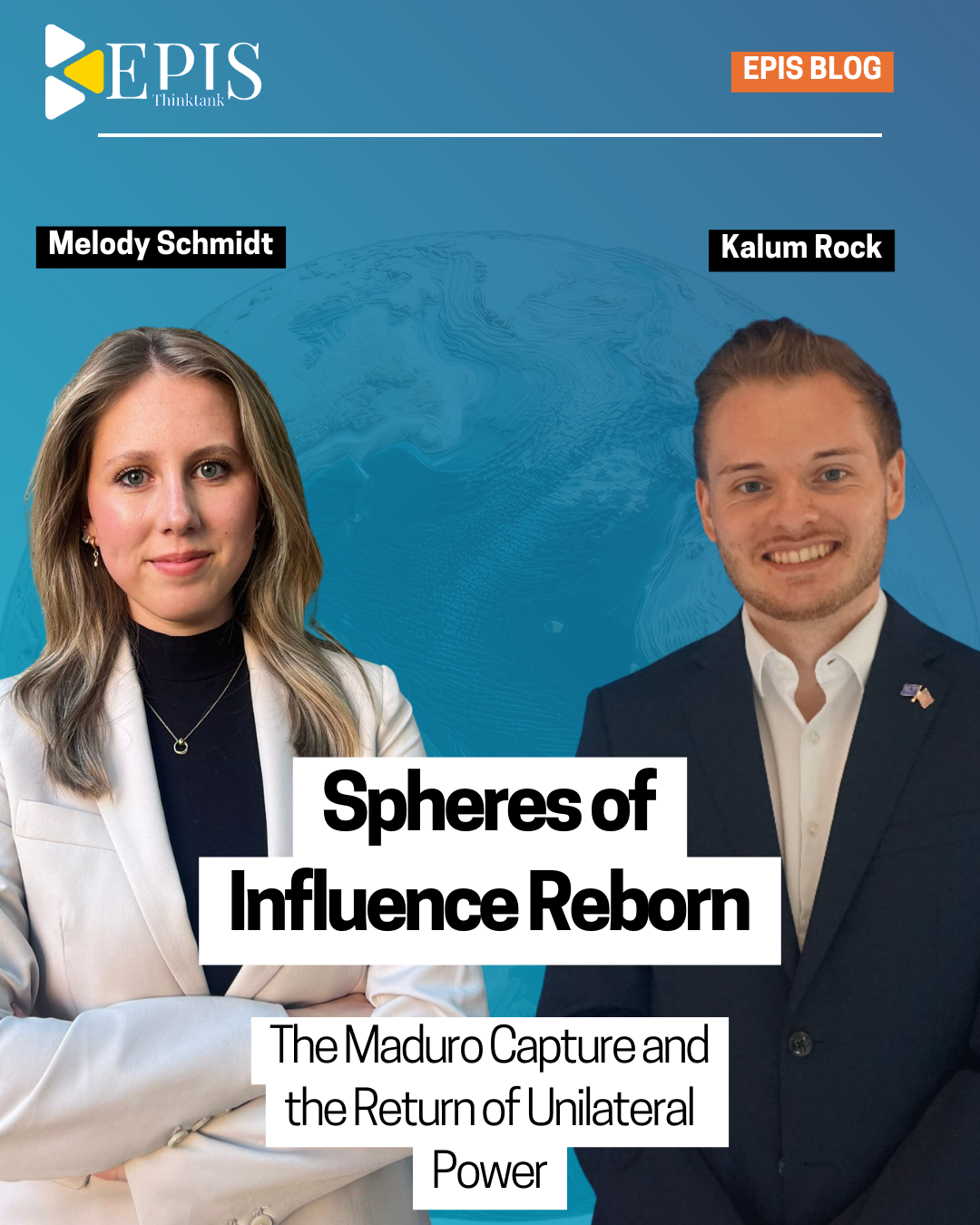
Spheres of Influence Reborn
Main question: Does the capture of Maduro reflect justice, or a broader shift toward unilateral U.S. power politics? Argument: The intervention serves economic and strategic interests, signaling a move toward spheres of influence and away from international norms. Conclusion: The operation marks a break with multilateralism, weakening sovereignty and setting dangerous global precedents.
-

Breaking Diplomatic Norms
Israel’s recognition of Somaliland at the end of 2025, Somalia’s territorial integrity, and decades of international consensus. This unilateral move reframes Somaliland’s three-decade independence as legitimate dissolution rather than illegal secession. The brief argues that state recognition is primarily driven by geopolitical interests, rather than objective legal criteria.
-

Rethinking EU Strategic Autonomy
How can the EU build strategic autonomy and relevance in a multipolar world without isolationism? Strategic autonomy must shift from self-reliance to mutual resilience through inclusive, horizontal partnerships with the Global South. An inclusive approach strengthens EU competitiveness, legitimacy, and long-term influence in a reformed multilateral order.