Category: Peacekeeping & Conflict Prevention
-
Human Rights & Aid in Post-Conflict MENA
In an interview with EPIS, Dr. Moosa Elayah examines why stopping a war isn’t the same as achieving peace.
-
The IDSF on security challenges in the Middle East
According to IDSF, Israel’s security relies on national resilience, technological innovation, and regional partnerships, while deradicalization remains essential for long-term Middle East stability.
-

The Unfinished Peace
Northern Ireland shows that peace is not the absence of conflict but the ability to manage political and social divisions without returning to violence.
-
What It Takes to Build Peace Today
In this guest contribution, Chris Coulter, Executive Director of the Berghof Foundation, examines how we can move beyond short-term deterrence to build lasting peace through local ownership, impartiality, women’s meaningful participation, societal trust, and adaptive mediation.
-
Ignored Warnings, Repeated Shortcomings
The EU’s inaction during the 2008 Russo-Georgian War institutionalised the failure of conflict prevention, creating the conditions for the 2022 invasion of Ukraine. Driven by path-dependent reliance on Moscow for energy security and incoherent foreign policy among its member states, the EU pursued appeasement politics towards Russia. Deep economic integration with an autocratic state compromised…
-
A Sectoral Roadmap to EU Integration
Main question: How can the EU advance cooperation and prevent loss of influence in Georgia, given structural incompatibility, political ambiguity, and dependence on Russia? Argument: The EU should apply gradual sectoral integration, prioritising energy independence, cultural networking, and regulatory alignment before political convergence. Conclusion: This pragmatic sequencing bypasses political deadlock and accelerates Georgia’s structured pathway…
-
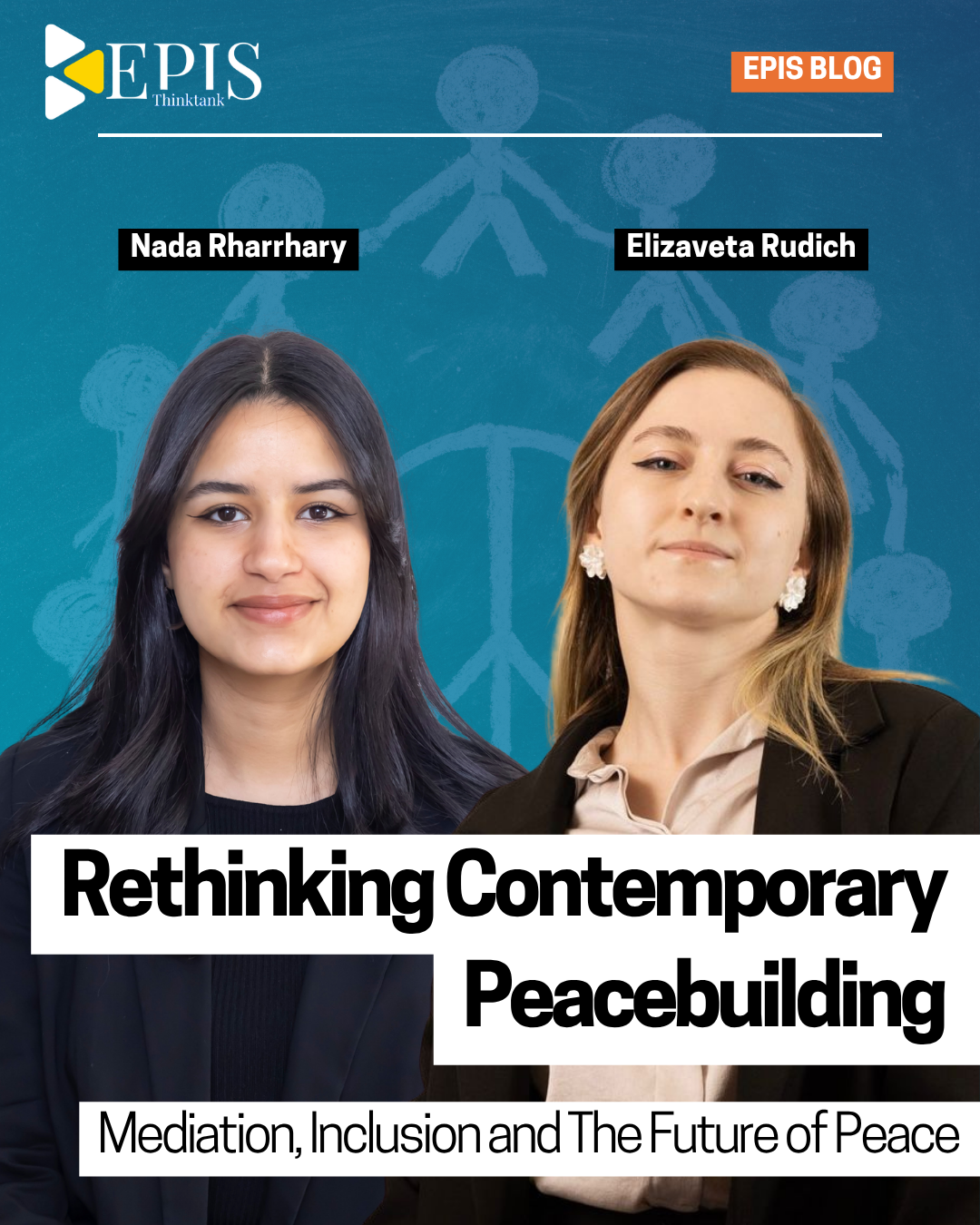
Rethinking Contemporary Peacebuilding
Main question: How can peacebuilding move beyond rigid approaches to create an inclusive and sustainable peace? Contemporary peacebuilding is framed by concepts which exclude local communities and organizations, thus, we need to ensure their inclusion in peace process on all stages and with full incorporation of relevant experiences they possess.
-
Iranian Resistence between Opression and War:
1. Sanaie links her family’s persecution to support for the NCRI and its vision of a secular democratic Iran. 2. She says protests are driven by repression, economic crisis, and violent state crackdowns. 3. Sanaie rejects foreign intervention and monarchy restoration, arguing only organized internal resistance can bring change.
-
The Crisis in Cabo Delgado: Why Mozambique Matters
A forgotten humanitarian crisis with deepening roots Rwanda’s intervention is strategically self-serving, not purely altruistic A new, fragmented security order is emerging in Africa
-
Anglophone Conflict in Cameroon
Historical roots driving a neglected conflict Structural silencing keeps the crisis hidden International complicity dims the spotlight further