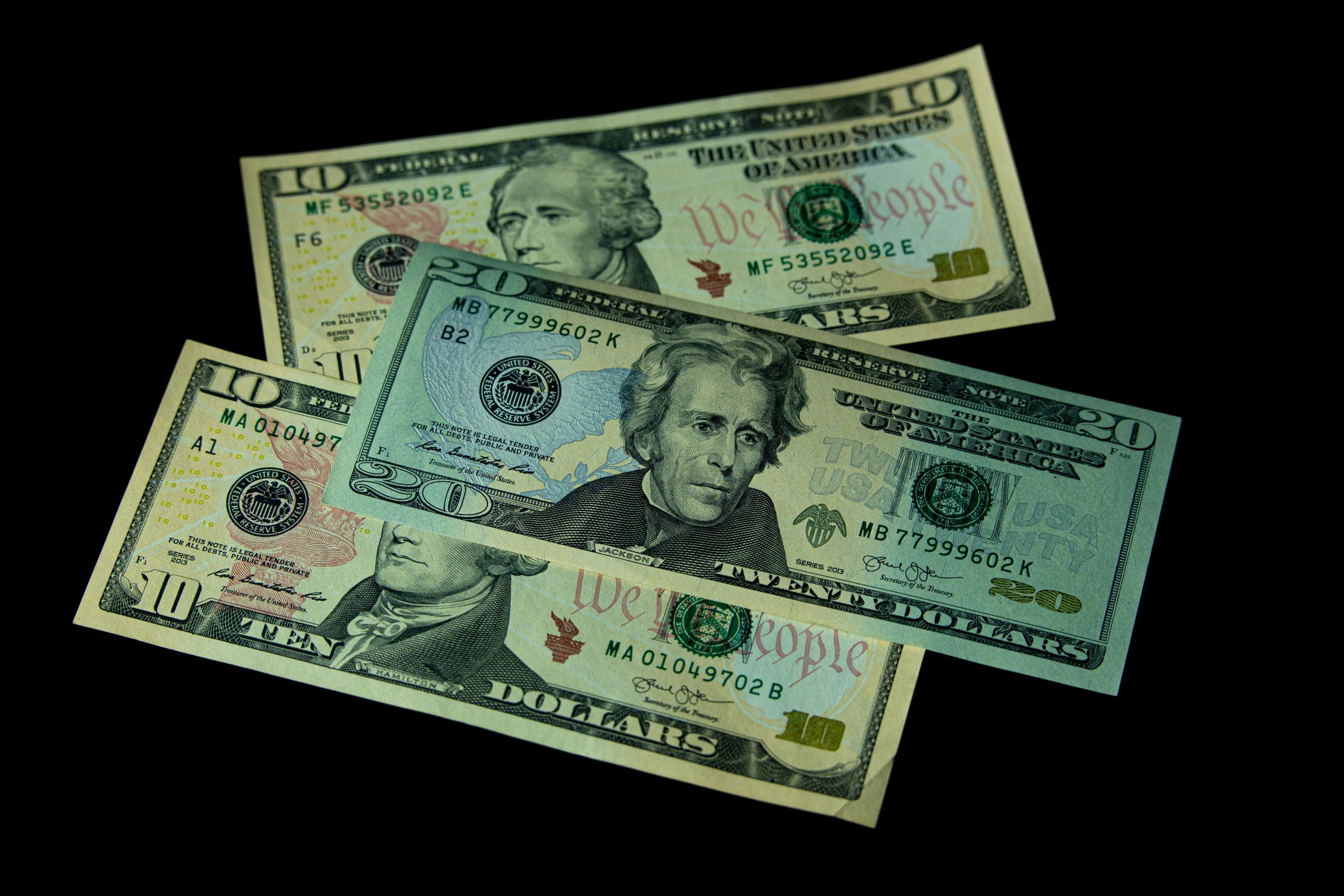
The United States Federal Reserve’s use of monetary policy has vast geopolitical effects despite the Fed’s dual mandate, maintaining price stability and maximum employment. As Jerome Powell’s term ends in May 2026, this raises a critical question: how do the Fed’s decisions affect American monetary dominance, and how will the change of the federal chair in this current climate affect it? This article examines dollar dominance, sanctions deployment, and BRICS alternative systems.
2. US Dollar’s influence and power
The American economy is able to export inflation because widespread use of the US dollar as a reserve currency forces other nations to devalue their own currencies or raise interest rates to keep pace with American monetary policy. Additionally, because most global commodities like oil are priced in dollars, an increase in the U.S. money supply raises prices for foreign buyers, effectively “pushing” American price increases onto the global market. Therefore, other economies become very susceptible to US cyclical economics, which can be very damaging. This amplifies the effect on Federal Reserve interest rate decisions, creating ripple effects across global economies through capital flow reversals. Capital flows represent the movement of money for investment purposes across borders, typically seeking the highest risk-adjusted returns available globally. When the Fed aggressively raised rates in 2022-2023 to combat inflation, emerging markets experienced significant capital outflows as investors redirected funds to higher-yielding risk free US Treasury securities, triggering currency crises in nations like Egypt, Pakistan, and Sri Lanka (Kalemli-Özcan & Unsal, 2023). Other countries’ monetary policy, regardless of their goals to limit inflation or encourage employment, often mirrors the Federal Reserve’s rate changes, due to the need to provide risk-adjusted government debt, relative to the United States treasury bills. This demonstrates how Fed policy functions as an involuntary external constraint on sovereign monetary policy, effectively limiting the policy actions available to central banks in the Global South.
3. Geopolitical uses of Monetary policy
Financial institutions and messaging networks like SWIFT are compelled to comply with American sanctions due to US dollar dominance in global finance. Most major international banks maintain dollar-denominated accounts in New York and depend on US capital markets and clearing infrastructure. If a bank were to violate US sanctions, it would cut them off from the US financial system, and thus all of the services that the US provides. Because SWIFT facilitates payments between its member banks’ New York and international accounts, it has no choice but to enforce US sanctions, often in coordination with the European Union. The risk of losing access to US capital markets and clearing systems is simply too great for most of its members to ignore. This has enabled the United States to use access to SWIFT as a weapon in times of conflict. The Russian invasion of Ukraine showcased this “financial blockade”. When the EU extended Russia’s SWIFT ban to a full transaction ban in July 2025, prohibiting all EU operators from engaging in transactions with 50 listed Russian banks (Albrecht vom Kolke et al., 2025), it demonstrated the coercive power of controlling financial infrastructure. This evolution from selective disconnection to comprehensive transaction prohibition illustrates how control over payment systems has become a useful instrument of economic warfare, parallel to traditional trade embargoes.
While sanctioned states have developed alternative financial systems, they remain fundamentally constrained by network effects and limited adoption. Russia’s SPFS system, created after 2014 Crimea sanctions, expanded to include 160 foreign banks by 2024 (Donovan et al., 2025). The SPFS system has also pursued integration with similar networks like Iran’s Shetab. However, US Office of Foreign Assets Control (OFAC) warnings in November 2024 about foreign financial institutions joining SPFS significantly deterred adoption, as potential participants weighed limited trade benefits with Russia against the loss of US Dollar access (Office of Foreign Assets Control, 2024). This reach of dollar-based systems and the fragmented nature of alternatives ensures that workarounds remain expensive, slow, and confined to relatively small volumes of trade between sanctioned states, leaving the dollar’s structural dominance largely intact.
4. Challenges to US Monetary dominance
BRICS de-dollarization efforts reveal the gap between geopolitical ambition and economic realism among member states. At the 17th BRICS summit in July 2025 in Rio de Janeiro, despite previous talks about creating alternatives to dollar dominance, the 126-point final declaration made no mention of a common BRICS currency or unilateral de-dollarization strategy (Tripathi et al., 2025). India explicitly distanced itself from the US Dollar replacement efforts, with External Affairs Minister Jaishankar declaring the dollar “the source of global economic stability” that the world needs more of, not less (Pistilli, 2026). This retreat from de-dollarization ambitions demonstrates the network effects of US Dollar dominance. When combined with threats of market access denial, it maintains the status quo even among those critical of American financial dominance.
Alternative payment systems have grown but remain smaller than dollar-dominated infrastructure like SWIFT. China’s Cross-Border Interbank Payment System (CIPS) processed 6.6 million transactions worth approximately $17 trillion in 2023, representing a 27% annual increase (People’s Bank of China, 2023). According to their January 2025 announcement, CIPS has expanded to 1,467 indirect participants across 119 countries (Cross-Border Interbank Payment System, 2025). However, these figures pale in comparison to SWIFT’s 44 million daily messages and the trillions processed through dollar clearing systems each day. The infrastructure exists for an alternative to rise, but not enough displace for a complete transformation of US monetary dominance.
Recently, central bank gold reserves have risen as a hedging strategy against dollar exposure, rather than an alternative to US Dollar reserves. BRICS+ (BRICS and Egypt, Ethiopia, Iran, Saudi Arabia, the United Arab Emirates, and Indonesia) central banks aggressively purchased 800 metric tonnes of gold in 2025, bringing combined gold reserves above 6,000 tonnes and keeping consistent with similar trends of building up gold reserves from recent years (Keskin, 2025). This coordinated buying has pushed gold prices to record highs of approximately $4,400 per ounce by late 2025, demonstrating market recognition of reduced confidence in dollar-centric reserve management. Yet gold’s lack of yields, storage costs, and limited utility for daily transactions ensure it serves as a wealth preservation method, not an alternative currency system challenging the US dollar.
The political and economic diversity within BRICS creates coordination challenges for unified de-dollarization efforts. China seeks Yuan internationalization but refuses to abandon its controls used to maintain domestic financial stability, having experienced devastating capital flight in 2015-16, causing foreign exchange reserves to fall by $1 trillion before tightening controls in 2017-18 (Brooks, 2024). India and Brazil maintain strong ties to Western financial institutions and explicitly rejected US Dollar replacement. Russia’s sanctions-driven desperation for alternatives is at odds with more cautious members. This conflict of interests, combined with the absence of any BRICS economy willing to provide the bond markets necessary for reserve currency status, ensures that de-dollarization remains limited to payment systems and bilateral agreements.
5. Beginning of a new era
Jerome Powell will leave office as the chairman of the Federal Reserve this May. The likely candidate to take his spot is Kevin Warsh. Warsh attended Stanford (BA) and Harvard (JD), worked in Morgan Stanley’s Mergers and Acquisitions (M&A) department, before working in the National Economic Council in George W. Bush’s administration. Warsh was nominated to the Federal Reserve Board in 2006, and at 35 years old, was the youngest appointment ever in the history of the Fed. Warsh was credited as the link between Fed chair Ben Bernanke and Wall Street due to his many contacts there, and was credited as an integral part of navigating the Global Financial Crisis (GFC). However, in the fallout of the GFC, Warsh was very skeptical of the use of Quantitative Easing (QE), due to its inflation risks, and thus he resigned from the board in 2011 (Board of Governors of the Federal Reserve System, n.d.). After his time at the Fed, he spent time back at Stanford, and on a business forum during President Trump’s first term.
Source – Federal Reserve
Despite a new Fed chair coming in for the first time in eight years, the dual mandate of the position doesn’t change. Warsh’s scepticism towards QE during the recovery from the GFC could imply a reluctance to expand the money supply aggressively as Fed chair. A more hawkish Federal Reserve chair can strengthen the power of the US dollar, as one of the central arguments for de-dollarization efforts is that the US could inflate its way out of debt obligations, erasing the purchasing power of dollar-based reserves. This can discourage efforts for alternatives. A commitment to price stability over economic stimulus will reinforce the dollar to reliably hold its value, and ultimately help American geopolitical interests. Whether this is Warsh’s goal is beside the point, but the ripple effects will be felt by global economies. The role of the Chairman of the Federal Reserve is not to push American geopolitical goals, but every decision that the Fed makes will shape American geopolitical policies due to the size and power of American capital markets.
Sources