Category: International Economic Relations
-
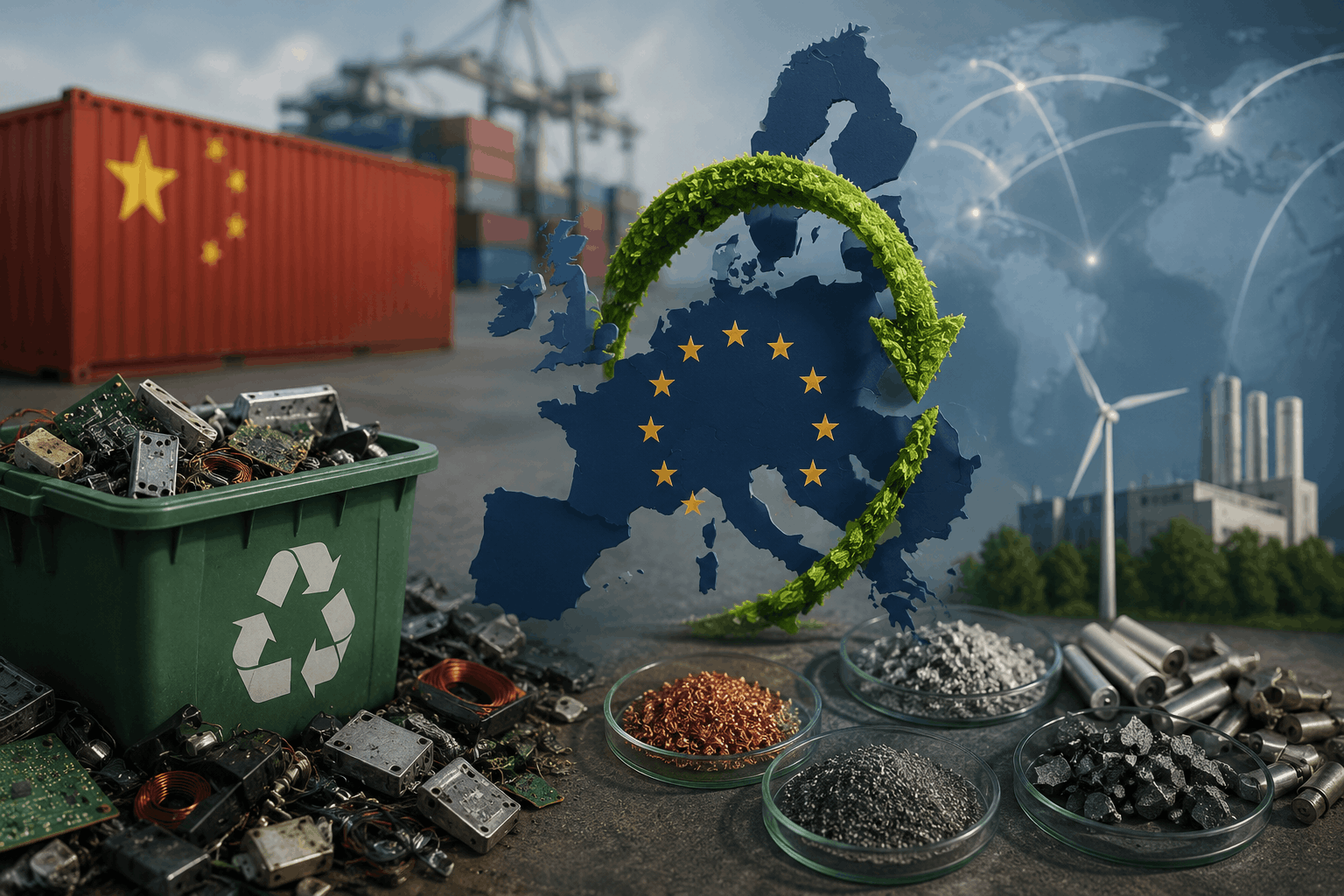
Securing Europe’s Supply of Raw Materials
China’s April 2025 rare-earth export controls exposed the EU’s dependency, and vulnerability. This article asks whether a single market for waste and recycling, championed by Draghi, could turn Europe’s own end-of-life products into a genuine strategic asset securing critical raw material supply.
-

The United States-Mexico-Canada Agreement (USMCA)
The USMCA strengthens trade by protecting businesses, innovators, and workers while promoting economic growth and closer cooperation among its member countries.
-

The AI Infrastructure Leverage Framework
Governments can shape AI by using infrastructure, energy, and regulation as bargaining tools to secure compute-sharing, data residency, and public benefits without nationalizing private firms.
-

US sanctions and Venezuela’s energy security?
The origins of Venezuela’s lasting energy security crisis and its effects on the country’s public order and broader economy are often explained in light of the United States’ increasingly interventionist foreign policy in the region. The United States administration’s promotion of great power diplomacy over what it considers to be its own sphere of influence…
-
WTO Appellate Body Crisis: Who Really Loses?
How has the paralysis of the WTO’s Appellate Body since 2019 affected members unequally? While larger economies have adapted through the MPIA and bilateral settlements, smaller members lack the legal capacity and leverage to navigate the post-AB order. With the US absent from the MPIA and reform efforts stalled, the crisis has shifted the trading…
-

Beyond OPEC: The UAE’s Strategic Shift
Main question: Why is the UAE leaving OPEC, and what are the consequences for geopolitics and global energy markets? Argument: The UAE seeks greater economic flexibility and strategic independence from Saudi-led OPEC policies. Conclusion: The withdrawal reflects a fragmenting global energy order and may weaken OPEC while increasing oil market volatility.
-
Bigger Without Losing Better
Main question: How can the EU achieve enlargement without letting budget redistribution strains create disruptive domestic political deadlocks? Argument: The EU must implement a formalized rule of limited fiscal impact containing a double threshold on national gross national income shifts. Conclusion: Effective management of budgetary distribution balances political perceptions, rendering enlargement both viable and stable.
-
European STEM Mobility Guarantee
Main question: How can Europe eliminate financial and administrative barriers to provide equal access to cross-border STEM experiences for all students? Argument: The EU must establish a STEM Mobility Guarantee using funded grants, a centralized digital portal, and standardized micro-credentials. Conclusion: This framework builds real technical capability, boosts economic competitiveness, and strengthens civic cohesion across…
-
Central Asian Vantage Point
Main question: How can European consultancies use Central Asia strategically? Argument: European consultancies can act as institutional and informational intermediaries, helping local states and firms adopt EU-compatible standards while also gaining insight into Russia- and China-linked regional dynamics. Conclusion: The safest strategy is to build services around compliance, digital trade facilitation, AML/CFT, procurement transparency, and…
-
CPEC and EU Connectivity
Pakistan can strengthen EU trade and connectivity through transparent governance, sustainable development, and standards-based cooperation under CPEC and the Global Gateway Initiative..