Category: International Relations & Diplomacy
-
Redistributing Influence
How has the war in Ukraine transformed Russia’s influence on the Korean Peninsula? The article argues that Russia is redistributing its influence toward politically aligned and anti-Western states. The shift from South Korea to North Korea reflects a broader Eurasian realignment. The paper concludes that Moscow is strengthening ties with states such as North Korea,…
-
EU Enlargement
Main question: How can the EU expand to maintain geopolitical influence without causing institutional stagnation or a budget drain? Argument: The EU must implement a three-stage accession model of gradual integration while removing national vetoes on enlargement. Conclusion: Structured phases and internal voting reforms allow the EU to become bigger and more efficient simultaneously.
-
Sectoral integration
Main question: How can the EU resolve the structural contradiction between the geopolitical need for expansion and the internal limitations slowing down linear enlargement? Argument: The EU must replace its rigid membership model with a phased, modular framework of sectoral integration alongside targeted personnel training programs. Conclusion: Rethinking enlargement as a gradual, managed process allows…
-
Rethinking the EU’s Expansion Dilemmas
Main question: How can the EU pursue geopolitically necessary enlargement without weakening its internal cohesion and governance capacity? Argument: The EU must implement a phased “European Political Sphere” framework alongside extending Qualified Majority Voting to prevent single-state vetoes. Conclusion: Aligning institutional deepening with widening transforms enlargement into a controlled, reversible process.
-
A Union that Scales
Main question: How can the EU adapt its traditional, binary enlargement process to expand geopolitically without falling into decision-making paralysis or democratic backsliding? Argument: The EU must implement a “Triple-Track Strategy” that unbundles integration into phased market access, political observership, and reversible rule-of-law mechanisms. Conclusion: Separating technical integration from the final political veto allows the…
-
Bigger or Better?
Main question: How can the EU expand its borders via geopolitically urgent enlargement without causing paralysis in its decision-making voting system? Argument: The EU must explicitly tie staged Council voting rights for candidate states to verified domestic milestones in democratic governance. Conclusion: Conditioning institutional rights on rule-of-law reforms preserves the Union’s strategic capacity to act…
-
Progressive EU Accession Path for Ukraine
Main question: How can the EU offer Ukraine meaningful integration benefits during a long pre-accession period without resorting to a politically accelerated membership that compromises standards? Argument: The EU should establish a “Progressive Accession” status, providing graduated Single Market access, institutional observer presence, and defense partnerships tied to verified reforms. Conclusion: This mechanism demonstrates geopolitical…
-
Rethinking Enlargement for a New Age of the EU
The article argues that the EU should adopt a dual-track enlargement model, enabling candidate states to join sector-specific policies before full membership while preserving constitutional safeguards.
-

What is Anarchy and can we overcome it?
[EPIS Basic Contribution]
-
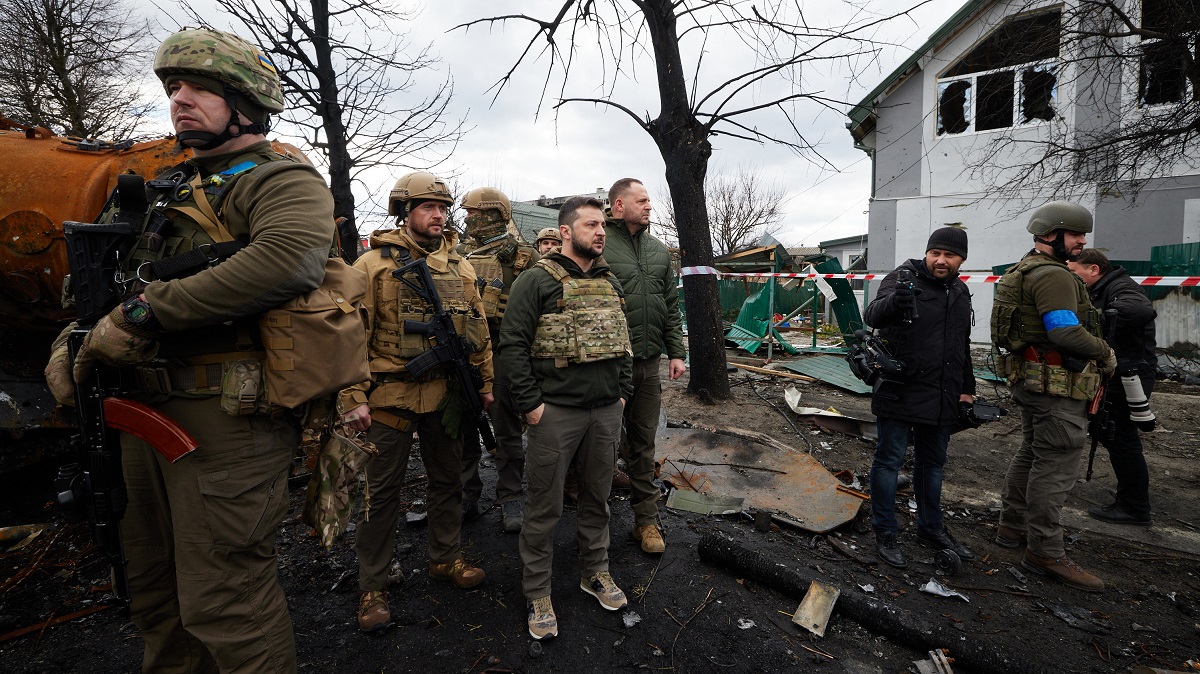
Policy Paper: The Cost of Unpredictability
Main question: how can policymakers address and navigate current geopolitical situation? Argument: Due to the absence of a central authority in the international system, states must rely on self-help. Conclusion: Policymakers should therefore adopt a hedging strategy by diversifying sector-specific partnerships in critical domains such as energy security, supply chains, and digital infrastructure, as heavy…