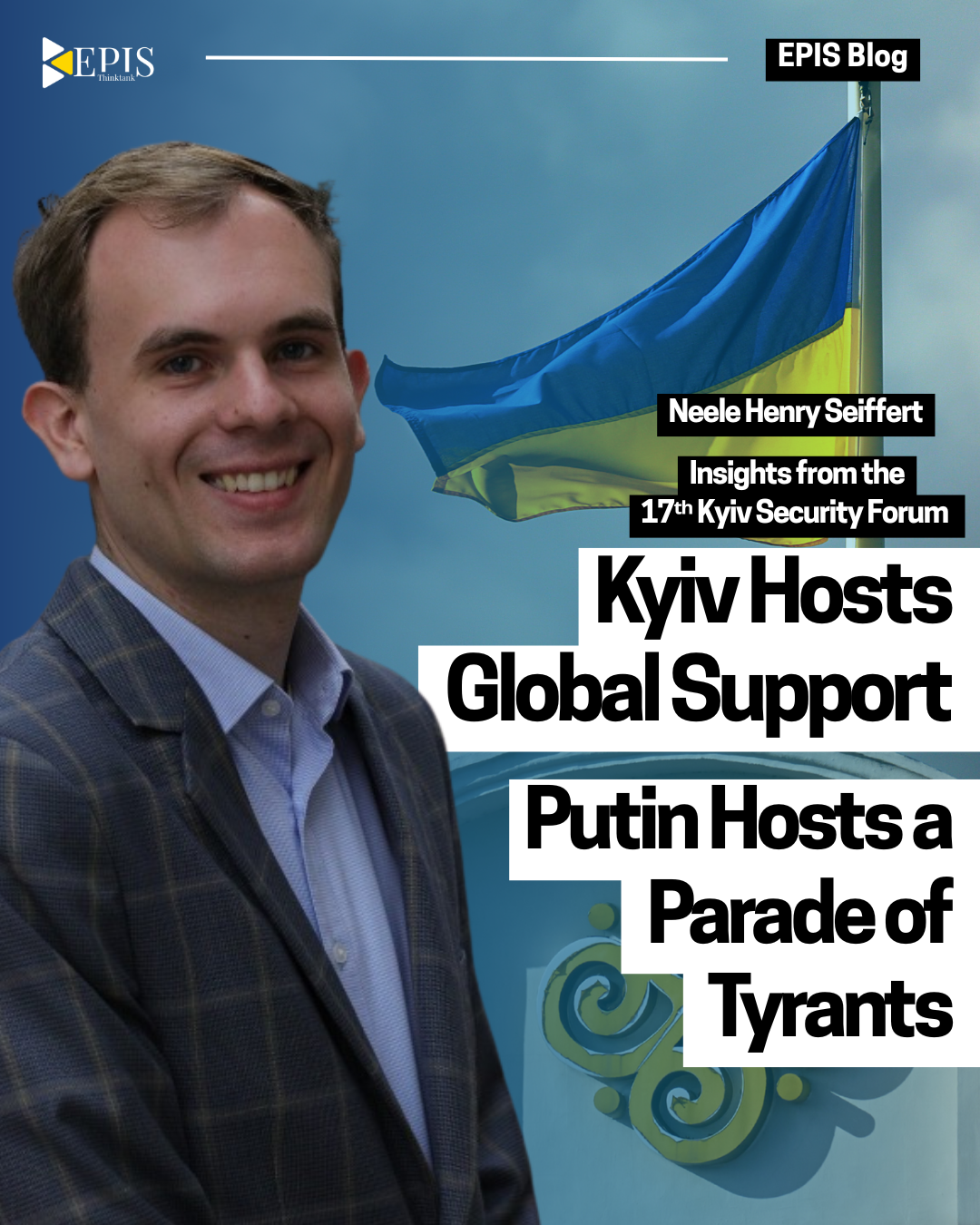
17ᵗʰ Kyiv Security Forum Report
Here are the key takeaways:
“By defending Ukraine, Europe defends itself,” became the Forum’s rallying cry. Yet the gathering revealed a geopolitical imbalance: U.S. officials outnumbered their European counterparts, and senior figures from Germany, France, and the U.K. were surprisingly scarce. However, this was compensated the following day, as Germany’s Chancellor Merz joined Presidents Macron, Tusk and U.K. leader Starmer in Kyiv to meet President Zelenskiy. Their joint communiqué reaffirmed political and military support and called for a 30-day ceasefire, underscoring that solidarity must translate into sustained, high-level engagement by Europe’s coalition of the willing.
Notably, Ukraine’s parliament ratified the landmark minerals agreement mid-conference—an initiative poised to fund reconstruction without new debt—yet it went almost unnoticed in panel discussions.
A few attendees mused about a “Reverse Kissinger” strategy—seeking a U.S.–Russia détente to isolate China, the mirror image of Henry Kissinger’s 1970s U.S. opening to Beijing to counter Soviet influence. Some speculated that President Trump, given his repeated expressions of sympathy for Putin, might try to follow such a strategy. But the forums’ consensus was unambiguous: It won’t work. China–Russia ties today are far deeper than any transactional U.S. offering could outbid. Rather, the U.S. should focus on cementing alliances rooted in shared democratic values, not brittle power‐plays or mercenary troop swaps.
By the Forum’s close, Kyiv’s spring light had inspired what one delegate called a felt new dawn of hope. Ukraine’s home-grown defence ingenuity now forms Europe’s bulwark. Directing frozen Russian assets into Kyiv’s startups would turbocharge battlefield innovation at unmatched speed and value. Additionally, fresh Western assistance—from advanced weapon deliveries to senior political pledges, have reignited momentum on the front. At the same time, Putin’s erratic gambits are better understood, and America’s occasional unpredictability has driven home a vital lesson: Europe can no longer outsource its security. Over recent months, Brussels and its capitals have come to see that standing shoulder-to-shoulder with Kyiv is not mere solidarity but essential self-preservation—and this hard-won clarity now fuels the political will to safeguard the continent’s future. True strength lies in deepening partnerships built on shared democratic values, not transactional overtures to autocrats. As Putin paraded with autocrats, Kyiv stood as Europe’s true bastion of freedom and innovation—our collective shield against the forces of chaos.