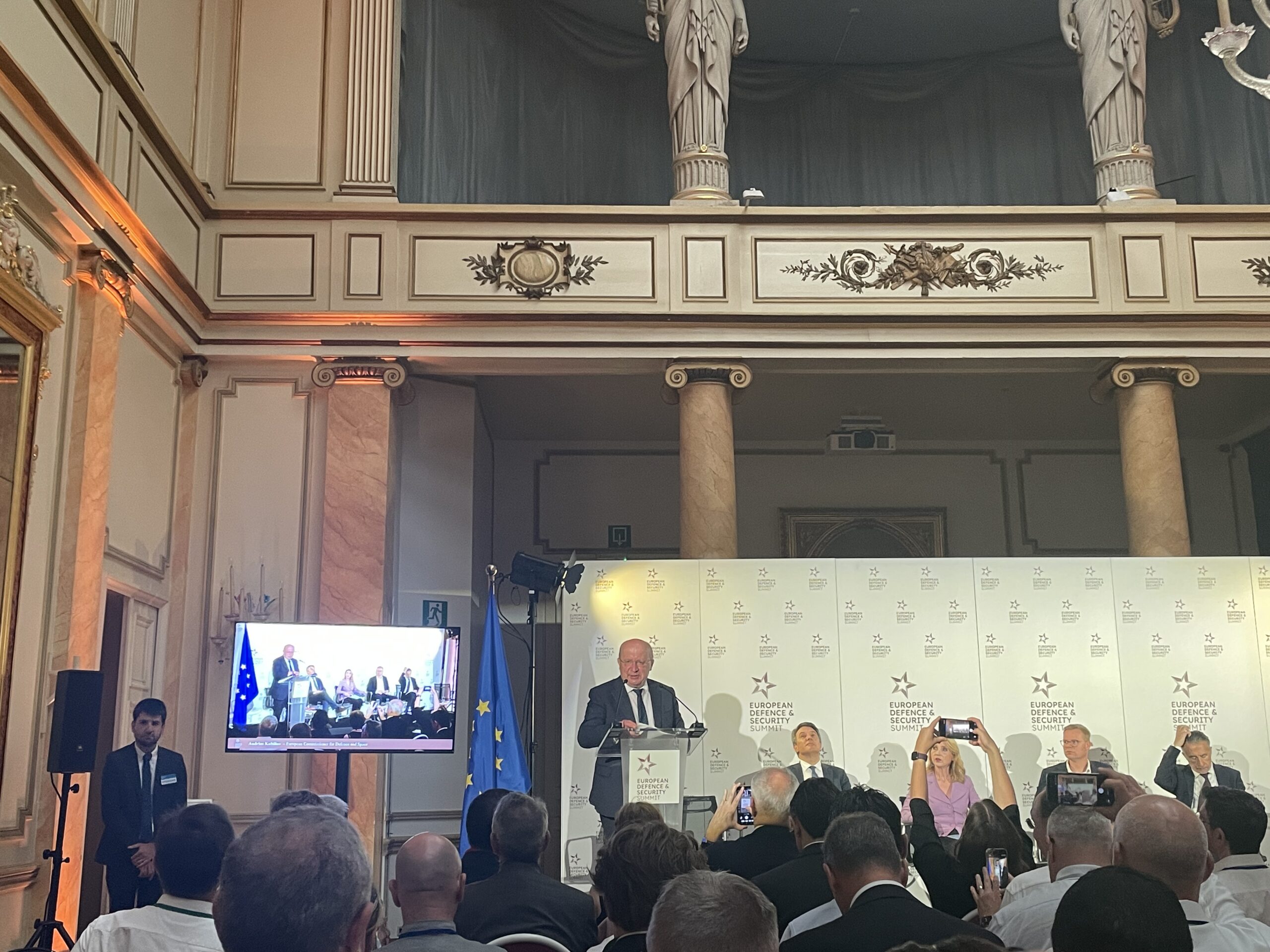
This year’s European Business Summit Defence and Security brought together prominent players in the EU’s defence policy: from the EU Commissioner for Defence and Space, Andrius Kubilius, to Deputy Chief Executive of the European Defence Agency, Anders Sjöborg, and Quantum Systems CEO Sven Kruck, many interesting speakers discussed the EU’s internal defence industrial policy on day one and the EU’s external defence cooperation on day two. Yet I will not use this space to summarise the programme. For anybody interested, it can be found here. Instead, I will focus on some key insights and thoughts in between, which are worth exploring in more depth. Following several panels, I had the opportunity to talk with panellists and dig deeper into points they had made during their contributions. Specifically, I will discuss three key insights and ideas: (1) rethinking defence procurement regulation, (2) the focus on implementing and harnessing existing EU programmes, and (3) the key question of buying European or not.
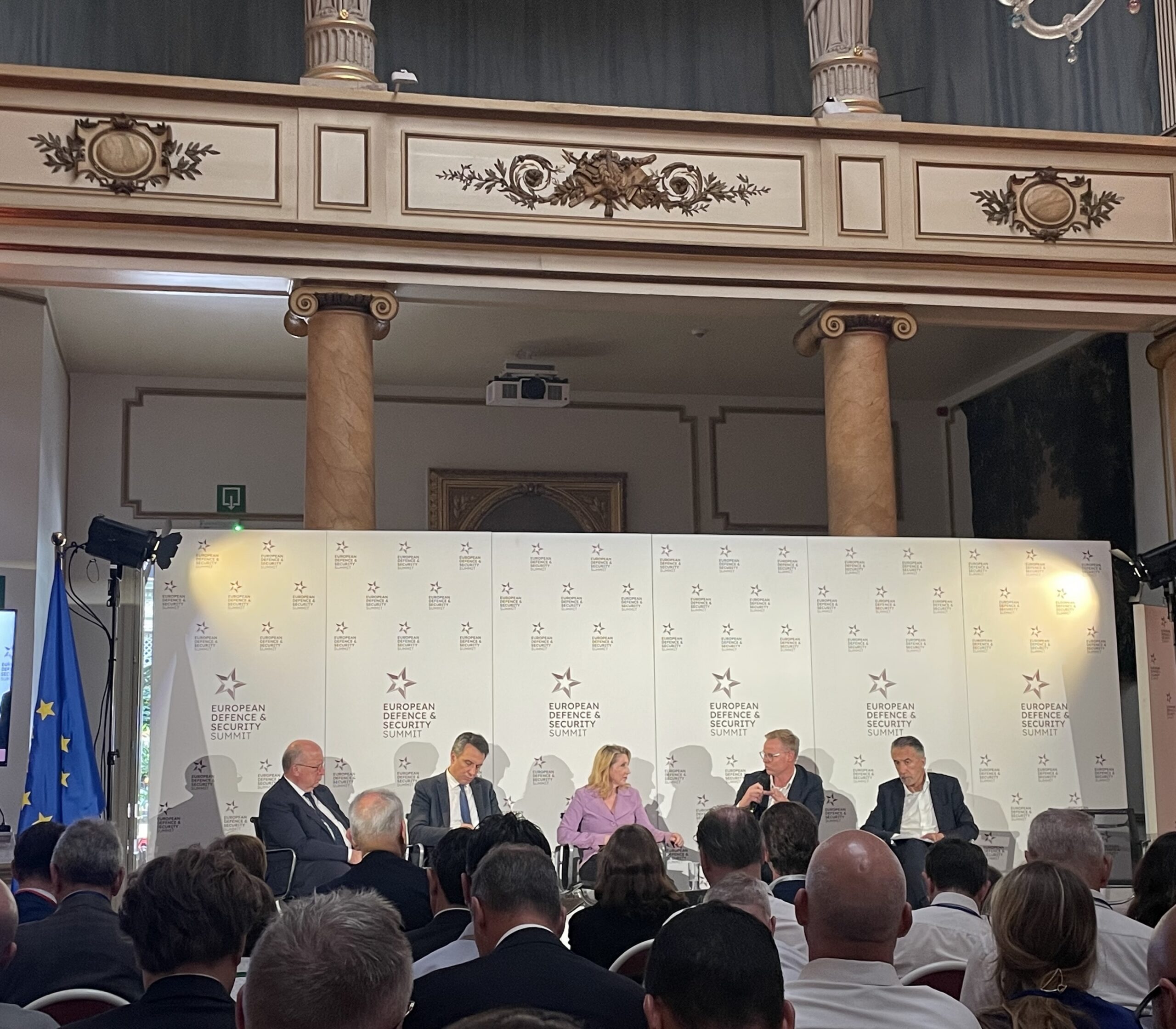
The first idea that stuck with me came from a proposal by Timo Engelhardt, a Partner at Linklaters, on rethinking defence procurement regulation in light of the changed geopolitical climate. The increased demand for military equipment poses a dilemma for Europe’s defence industry: on the one hand, investing in new production capacity is imperative to keep up with current demand; on the other hand, such an investment is an economic risk for companies should demand decline in the future. Even more so, continuous defence readiness requires maintaining production capacity even when it is not in use, so that in times of crisis, needed equipment can be delivered rapidly. So what, one might wonder, does this have to do with procurement regulation?
Put simply, changing our approach to defence procurement, modelled on how public procurement works in the energy and pharmaceutical sectors, would mean that the customer, the State, “insures” the ramp-up and maintenance of production capacity through its procurement contracts. This can take different forms. Capacity-reservation contracts are frequently used to ensure availability of sufficient energy supply during rare peak days. Translating these so-called capacity remuneration mechanisms (CRMs) to the defence sector would mean that governments would pay companies to maintain production capacity even in the absence of any demand and actual production. Advance purchase agreements are another example that could be a blueprint for future defence procurement. Having found application in the Covid-19 vaccine procurement, this contract type essentially means that the customer funds the industrial ramp-up needed for future contracts even where those contracts are not yet concluded and the quantity of orders is unclear. In my opinion, the insurance and de-risking of the scale-up and maintenance of production capacity, even in times of declining demand, are an imperative for a strategically autonomous and defence-ready Europe. The years of underinvestment and neglect have weakened the European Defence Technological and Industrial Base (EDTIB) structurally and rendered Europe vulnerable to foreign threats. Making sure that this does not happen again requires foresight beyond the current demand surge and the use of novel instruments changing the way we think about defence procurement. There is no reason why access to state-of-the-art military equipment in times of crisis should be treated with less permanent care than access to electricity or medical equipment. The European Defence Industry Programme (EDIP) already incorporates some of these mechanisms in embryonic form, yet the full potential is not exploited.
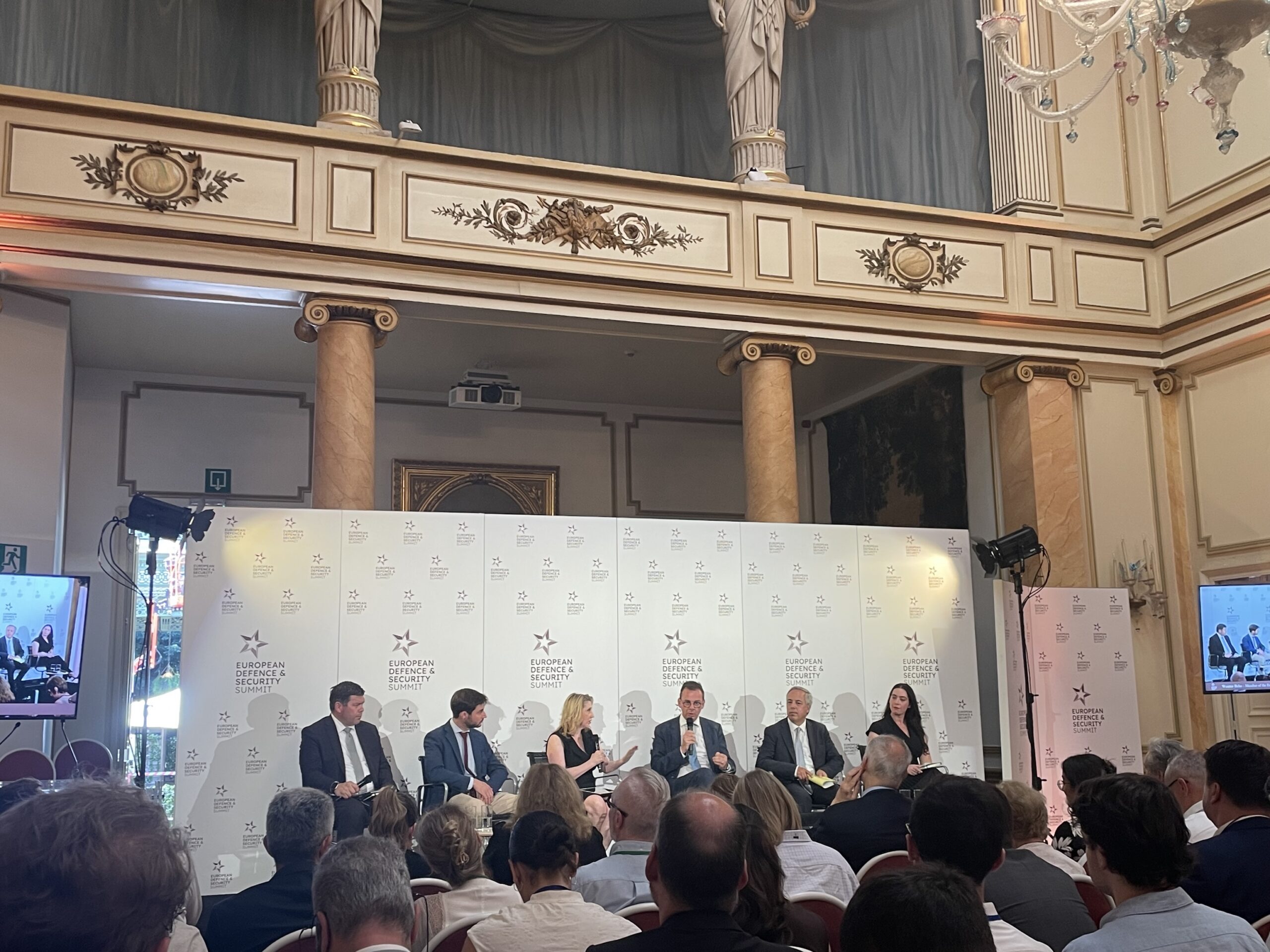
The second key theme, mentioned at almost every panel, was the need to use existing financial resources more efficiently. Member States, with the help of several EU initiatives, have significantly increased their defence spending since 2022. Yet, as noted in the most recent EDA report on defence spending data 2025-2026, Member States spend their resources at home and largely on defence equipment procurement, as opposed to other relevant investment areas, such as personnel, R&D, and infrastructure. This reflects a – without doubt justifiable – short-term focus on closing key capability gaps. Yet it risks overlooking a broader long-term vision for a European defence market that can benefit from economies of scale, enhance interoperability, and ensure a strong EDTIB.
However, and this was a repeated point at the conference, the responsibility for European defence readiness and the efficient use of resources does not lie solely with governments but equally with businesses. The willingness of businesses to engage in European consortia and to cooperate is what is needed to create a strong and transboundary EDTIB. Programmes like the EDF are key to building such transnational business relations, and it is on businesses to make use of these opportunities, building lasting relationships even while, for the moment, the national government remains the most important customer. In the long term, this will be a key to the Europeanisation of the defence industry.
Finally, the old tale of “buying European” reappeared at this year’s summit. Much has been written about this question, be it from the perspective of reducing reliance on U.S. military equipment amid geopolitical tensions, or from the viewpoint of strengthening European strategic autonomy as a goal in itself. Yet the conference took another perspective, one that I, at least, have paid less attention to: should major European defence programmes be open to Turkey?
There are, without question, problems regarding the state of the rule of law in Turkey; Turkey’s membership application to the EU remains frozen; and tensions with EU Member States Greece and Cyprus persist. Still, it is a simple geopolitical reality that Turkey has the second largest military in NATO and has built a strong DTIB while Europe was cashing in its peace dividend. It is thus not far-fetched when Turkey’s representative to the EU, Yaprak Balkan, and Turkish defence industry representatives argue that the Turkish DTIB has the ability to fill critical capability gaps in the EU. Yet Turkey remains outside key EU defence industrial instruments, excluded from direct funding, with its industry ineligible for the EU component of these instruments. In a way, this debate again reflects the aforementioned tension between filling short-term capability gaps and building a long-term, strategically autonomous EDTIB. In my opinion, the political unreliability and value incompatibility of the Erdogan government are a factor that should not be taken too lightly, and Europe should weigh it in its defence industrial cooperation. Yet this does not mean that Europe should not engage with Turkey. As argued elsewhere, it rather means that the EU should pursue partnership strictly based on reciprocity and mutual security, with clear sunset clauses that protect European interests.
If there were only one takeaway of the conference that I would highlight, it would be the repeated key question that can be observed across policy issues related to Europe’s defence readiness: how do we close short-term capability gaps while building long-term defence industrial strategic autonomy? This, in my opinion, is the Gordian knot of Europe’s defence readiness efforts.