Category: Security Policy & Defence
-
Impact of the US Election on the Asia-Pacific
1. What are the challenges facing the Asia-Pacific Region today?; 2. Trump will face new challenges that make the region more volatile than during his first term; 3. He has influential China hawks in his administration, but also anti-war activists, making it difficult to predict how he will handle the region
-

Annual CIMIC Foresight Conference 2024
The conference showcased how Civil-Military Cooperation (CIMIC) enables mission success in complex environments. It examined CIMIC’s future role amid hybrid threats and natural disasters. Participants emphasized the need for stronger integration of civil actors in planning, intelligence, and stabilization efforts.
-

The Muslim Brotherhood as Hybrid Actor
How does the Muslim Brotherhood challenge Western stability? This article highlights the Brotherhood’s hybrid tactics, using social, political, and technological means to promote its Islamist agenda in Western societies. Through extensive networks in Europe, it operates within legal frameworks while advancing subversive goals. Recommendations focus on bolstering democratic resilience, enhancing integration, and reinforcing security cooperation…
-

Cyber-Insecurity: Regulating the Future
1. In the aftermath of the Lebanon pager explosions, how can we be sure of ourselves against the threat of cyber attacks as individuals? 2. Through understanding crisis points such as CrowdStrike outage, it is possible to analyse the vulnerabilities we have in the modern world. All these accidents prove that states, organisations and individuals…
-

Stoltenberg Out, Rutte In
What can be expected from Mark Rutte as NATO’s new Secretary General? This article examines Rutte’s thirteen years as Dutch prime minister, marked by crisis management and coalition-building, qualities now essential for NATO. With tensions escalating from Russia, China, and within NATO itself, Rutte’s diplomatic skills and pragmatic approach to international relations are crucial. Despite…
-

Sweden’s Historic Shift
What does Sweden’s NATO membership mean for its national defence? This article examines Sweden’s transition from neutrality to active alliance participation, focusing on how it strengthens regional security in the Baltic and High North. With strategic assets like Gotland and a robust defence industry, Sweden bolsters NATO’s operational capacity. The Swedish Armed Forces now adapt…
-

Artificial Intelligence & Aggressive Intentions
Can AI reshape the future of warfare and deterrence? This article explores how advancements in AI and autonomous weapons are transforming military strategy and state power dynamics. As weapons systems grow more independent, states are redefining deterrence strategies to maintain security in a rapidly evolving technological landscape. From drones to human-machine teaming, the article examines…
-

Proliferation of Satellite Mega-Constellations
What does the rise of satellite mega-constellations mean for Europe’s strategic autonomy? As the space industry shifts to commercial dominance, mega-constellations like Starlink offer global connectivity but also pose strategic risks. This article explores how Europe’s dependence on non-EU satellite infrastructure could undermine its security and analyses the EU’s response, including the development of IRIS²,…
-
We will have a EU Black Sea strategy
How can the EU assert strategic influence in the Black Sea amid growing geopolitical tensions? The EU must move beyond ambiguity by developing a coherent Black Sea strategy focused on infrastructure, defense cooperation, and integration of Eastern partners. A credible EU presence requires real investment, transatlantic coordination, and regional incentives.
-
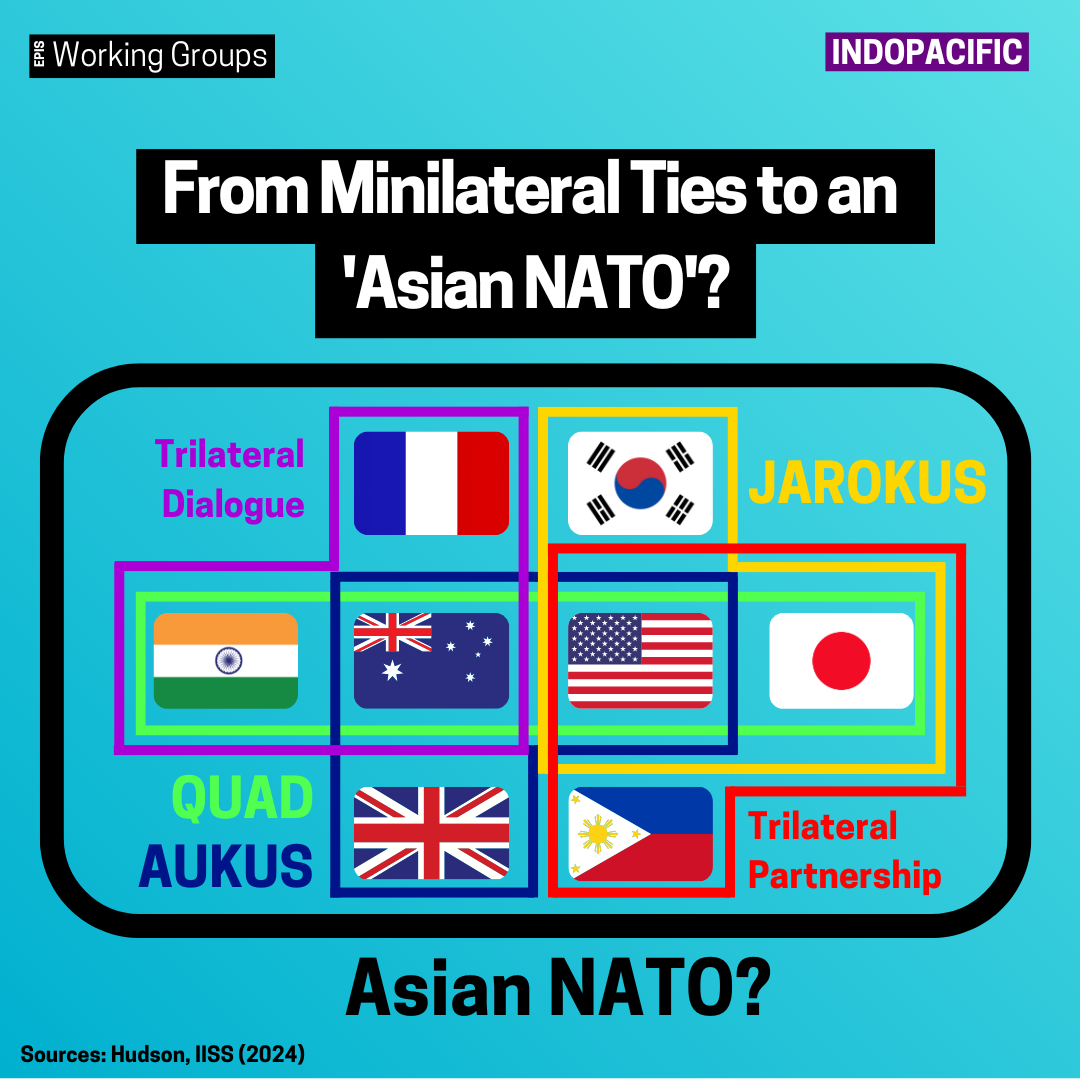
Unlocking Asia’s Defense Potential: From Minilateral Ties to an ‘Asian NATO’?
Prime Minister Shigeru Ishiba called for an “Asian NATO” to address growing security threats. However, the proposal faces criticism from ASEAN nations.